

|
Share to:
Related Products
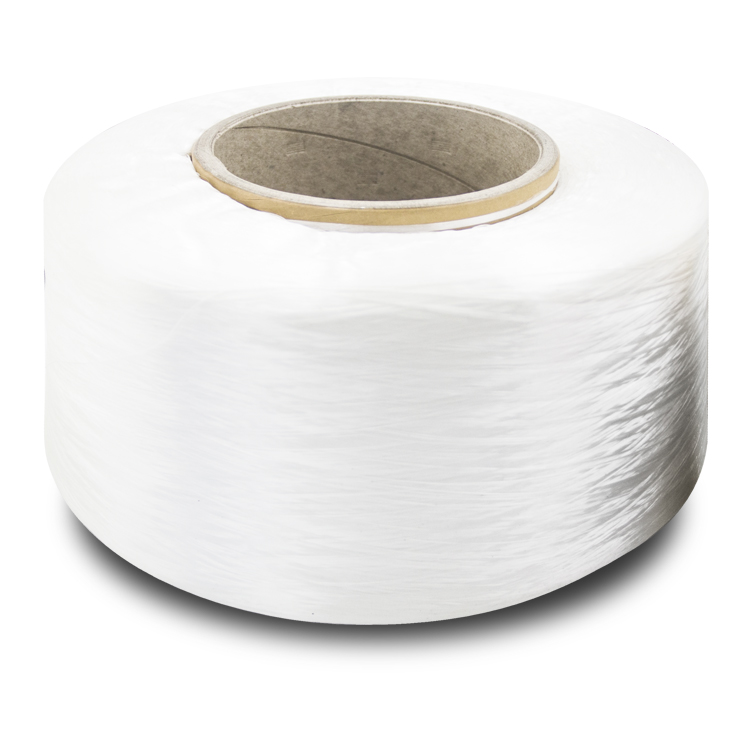


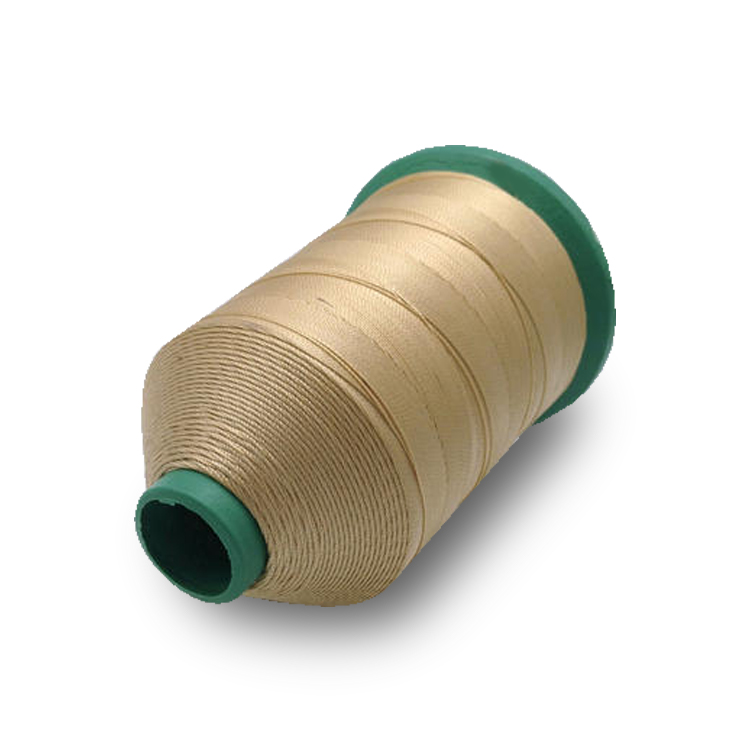
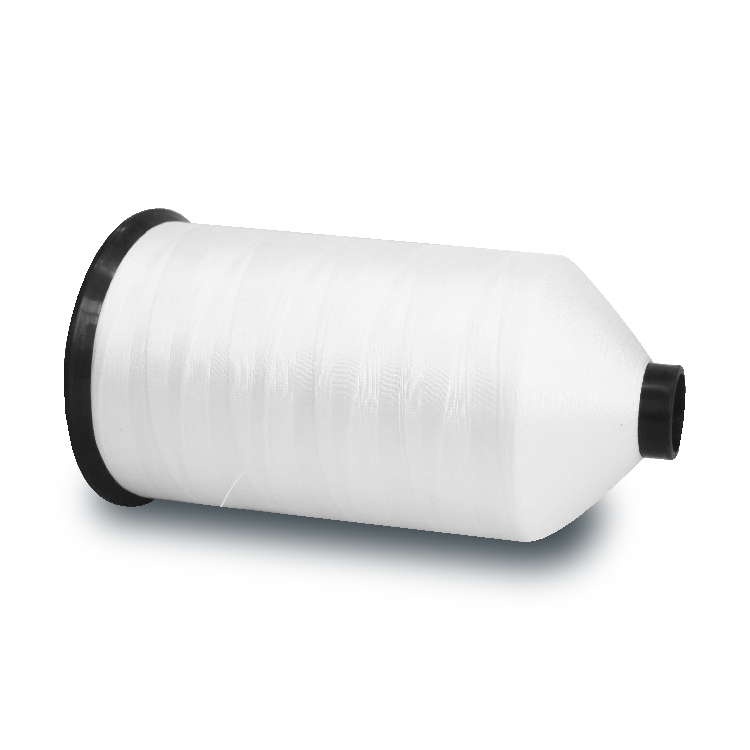

402 100% polyester yarn for sewing thread virgin color yizheng fiber material
LQ-0412
Price: From $0.66
Delivery time: 9-20 days after payment
MOQ: 500 KG
402 100% polyester yarn for sewing thread virgin color yizheng fiber material
Dyeing process of common spandex containing textiles
Dyeing process of common spandex containing textiles
Common spandex containing textiles can be divided into the following categories: Nylon / spandex, polyester / spandex, cellulose / spandex and wool (or silk) / spandex blends or interwoven fabrics. Among them, for nylon, wool or silk and spandex interwoven fabrics, often choose acid dyes, neutral dyes to dye. If the spandex is modified by tertiary amine, the spandex and the above fibers can be dyed with darker color and better wet fastness, but the dyeing rate and saturation value of the spandex and these fibers are different, often with different color fastness. In order to get better homochromatic effect, dyes should be selected carefully. The commonly used dyes and dyeing processes of spandex containing textiles are described as follows.
Dyeing of nylon / spandex blends or interwoven fabrics
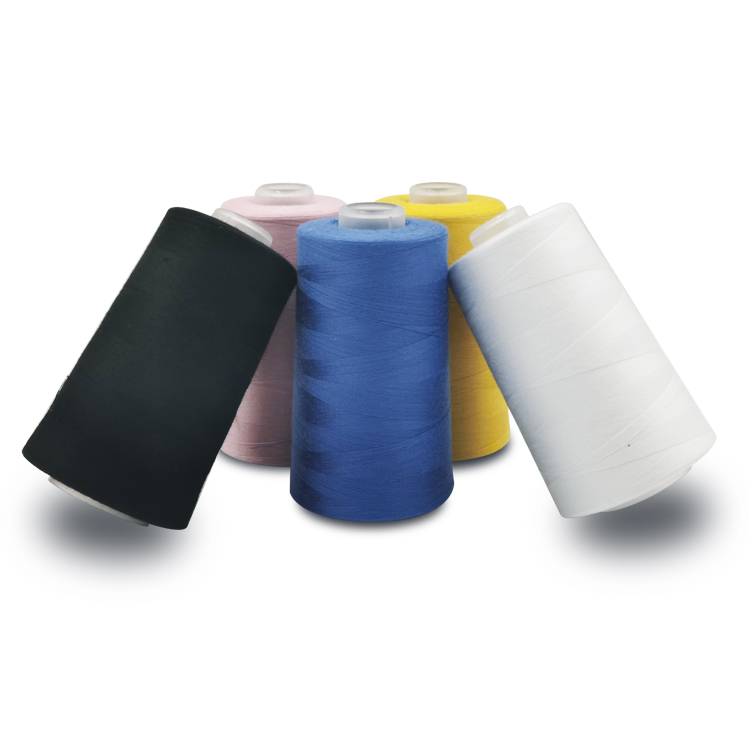
The dyes commonly used in nylon are acid and neutral dyes. These dyes can also dye spandex, but the fastness is poor, especially acid dyes. Therefore, the fastness of blended fabrics dyed with these dyes is always worse than that of pure nylon fabrics.
For this reason, dyes with good fastness should be selected, such as Lanaset dye of Ciba company, and some neutral dyes made in China can also be used. In addition, the levelness of these dyes is poor, so it is very important to develop a reasonable dyeing process, especially to control the pH value of the dye bath and the washing and fixation after dyeing. Because of the fast adsorption of acid dyes on nylon, slow dyes should be selected and the initial dyeing temperature should be lower, so that the two kinds of fibers have better color matching effect. If it is unmodified spandex, the color of spandex is light under normal conditions, and the wet fastness is very low, then other dyes or dyeing methods should be used.
Ciba company introduces the dyeing process of Lanaset or erionyl a dye as shown in Figure 2-18. It can be seen from the figure that due to the poor levelness of this kind of dye, the pH value should be slightly higher at the beginning of dyeing, which is suitable for 8-8.5, and the dyeing speed should be slower, so as to make the levelness better; in the later stage, add acetic acid buffer solution to reduce the pH value of the dyeing bath, so that the dye can be fully dyed (after 30 minutes of dyeing, add acid when boiling dyeing). Lanaset dye has good color fastness and reproducibility in light color dyeing without fixation.
For the dyeing of dark color varieties, the pH value of dyeing bath should be lower, adjusted to pH = 6-6.5 with acetic acid, and washed fully after dyeing. For particularly deep varieties, such as black or navy blue, to carry out post dyeing treatment, you can use fixing agent, such as anionic fixing agent cibafix PAS, or carry out two times of fixing treatment, that is, use cationic fixing agent cibafix eco to treat in the last water bath, or do the last soaking treatment together with softener, and dry after treatment. The process of two fixation is shown in Figure 2-19. Two kinds of color fixatives can not be in the same bath, otherwise precipitation will occur.
2. Dyeing of polyester / spandex blends or interwoven fabrics
Although polyester fabrics containing spandex can be dyed with disperse dyes, the dyeing temperature of the two fibers is quite different. Polyester needs to be dyed at 130 ℃ under high temperature and high pressure to have good dye uptake and improvement. In this condition, spandex is easy to be damaged and shrink, so the dyeing temperature should be reduced. So the first contradiction is the dye uptake and improvement of disperse dyes on polyester and the damage of spandex; the second contradiction is that under normal conditions, disperse dyes will stain spandex and reduce the color fastness of products. For this reason, various companies have developed some dyes and auxiliary agents. The developed dyes have the following characteristics:
(1) high dyeing fastness on polyester.
(2) it has a good promotion and dye uptake to polyester, and can be dyed at a lower temperature.
(3) it is light to spandex, and easy to reduce, clean and remove.
In order to solve the contradiction of dyeing temperature, on the basis of selecting suitable dyes, some dye promoters are developed, which are actually carriers, that is, carriers (environmental friendly) dyeing. For example, univadine Pb of Ciba company, which is suitable for terasil w dyes, can be dyed at 120-130 ℃, 120 ℃ for 60min, 125 ℃ for 45min, or 130 ℃ for 15-30min, thus shortening the dyeing time. For example, when using foron Rd series dyestuffs to dye, use the dye promoter dilatin POE (liq.) to dye at 120 ℃ for 45min.
In addition, the wet fastness of most disperse dyes on spandex is very low. After dyeing, washing should be strengthened to remove the staining on the surface of spandex. Sometimes, in order to get the textiles with good fastness, it is necessary to add special anti staining auxiliaries to prevent the dyeing of spandex by disperse dyes. At this time, spandex is basically not dyed.
It is found that the dye uptake and fastness of spandex can be improved by using disperse dyes with proper structure and special auxiliaries. After dyeing, it is necessary to carry out reduction cleaning, especially for disperse dyes stained on spandex. The temperature of reduction cleaning is at 70-80 ℃, in addition to baking powder and caustic soda, detergent aids, such as cibapon OS and sandopur Pu, can also be added, which can reduce the re contamination of disperse dyes on spandex. The schematic diagram of their functions is shown in Figure 2-20.
Cibapon OS can reduce the balance adsorption capacity of disperse dyes on spandex. If the reduction cleaning temperature is higher than 80 ℃, it is better to use a stable reducing agent, such as the reducing agent for discharge printing. Antipollution agents have affinity and solubilization for dyes. Most of them are complexes of some surfactants, some of which are non-ionic, some of which are amphoteric, such as weak cationic and non-ionic. The product performance of different companies is also different.